ASC 606 Commission Disclosure Requirements in Financial Statements
Companies must capitalize sales commissions and disclose how they amortize them.

ASC 606 and its companion standard, ASC 340-40, changed how companies account for sales commissions: what used to be a simple period expense is now a capitalized asset on the balance sheet. The reasoning rests on a basic premise of accrual accounting: a commission paid to win a customer contract delivers value over the span during which the company actually transfers goods or services under that contract, so the cost belongs on the balance sheet, amortized over time, rather than dumped onto the income statement the month it was paid. Financial statement users need disclosure requirements precisely because of that timing shift. Once a commission becomes an asset instead of an expense, financial statement users need to know how large that asset is, how fast it's being amortized, and what judgment went into those numbers.
Capitalization under this framework is not optional. The Codification uses the word "shall" wherever the criteria for capitalizing incremental contract costs are met and no practical expedient applies, and "shall" in accounting standards leaves no room for discretion. Companies still expensing commissions as incurred after adopting ASC 606, without having revisited that treatment, are not exercising some grandfathered election. No such election exists in the standard. That mandatory posture is what makes the next question, which costs actually qualify for capitalization, the first real judgment call Finance teams have to get right.
Capitalizable and excluded commission costs
The standard draws a narrow line around what counts as a capitalizable cost, and that line runs through the concept of incrementality. A cost qualifies only if the entity would not have incurred it absent the contract being obtained, and a sales commission is the textbook case: it exists solely because a deal closed. Base salary, travel during negotiations, marketing spend, and proposal preparation costs all fail this test, because a company incurs them regardless of whether the customer ever signs. None of those get capitalized, however closely they track to the sale.
The test gets harder to apply once compensation structures get layered. Many organizations pay commissions not just to the rep who closed the deal but also to a sales manager above them, and you have to evaluate each of those payments on its own against the incremental cost test. ASC 606 excludes a payment from capitalization based on whether it meets the incremental cost test, regardless of whether the recipient carries a management title or a quota-carrying one. What matters is whether that specific payment was incurred only because the contract was obtained, or whether it reflects general variable compensation that would have been paid in some form regardless of this particular deal.
Tiered commission structures pay a rep a lower rate on early-period sales and a higher rate once they cross a volume threshold, and they generally still clear the incremental test, but you have to evaluate each tier on its own terms. A tier that produces no commission produces nothing to capitalize, so you have to confirm the incremental link tier by tier, not at the plan level. That granularity requirement means the capitalization decision isn't something Finance settles once at the policy level and never revisits. It requires knowing, deal by deal, which rate applied and why, which is a data precision problem as much as an accounting one. Getting this layer wrong corrupts every calculation that follows, because the amortization schedule and the disclosures both inherit whatever capitalized balance this step produces.
How amortization periods are determined
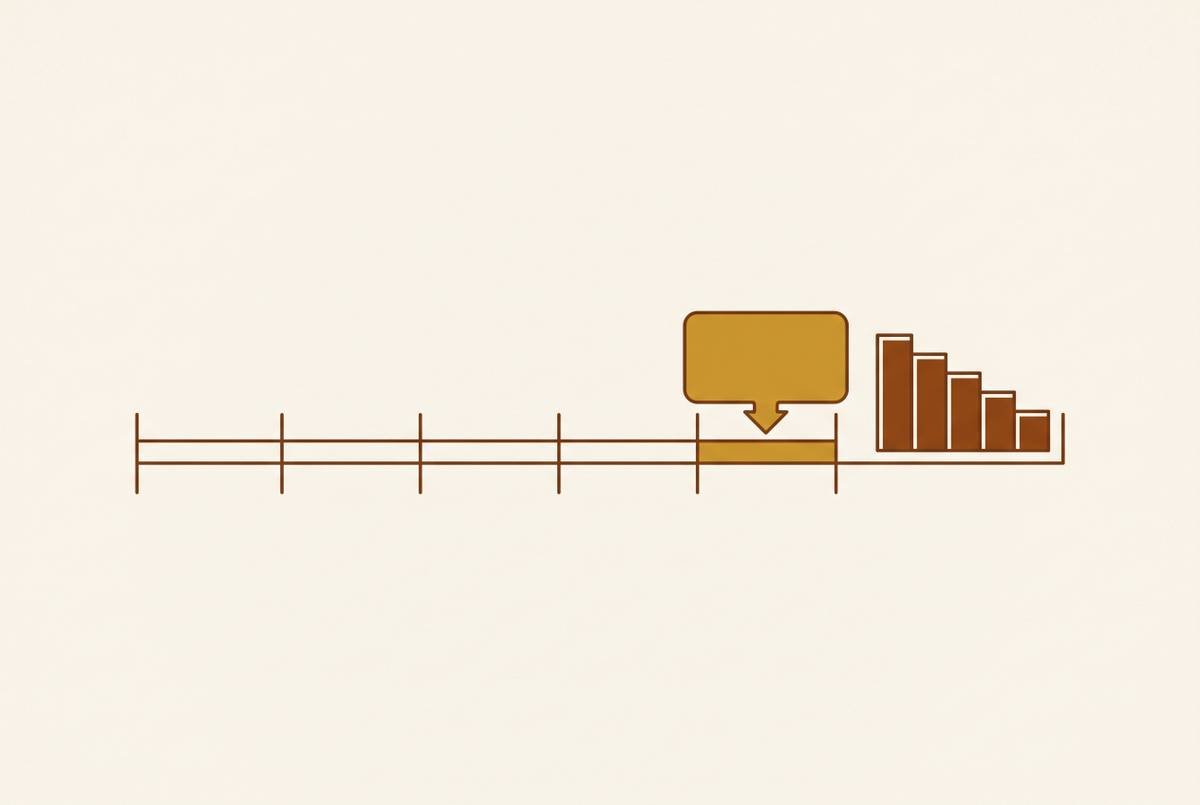
Once a commission clears the incremental cost test, the next question is how long to spread it, and the answer is rarely as simple as "the length of the signed contract." ASC 606 requires amortization over the period during which the related goods or services are transferred to the customer, and that commonly means the contract's useful life or an estimated customer lifetime; the two diverge often enough to matter. If historical data shows that most customers in a cohort renew a one-year contract, you have to amortize the initial commission over the combined expected lifecycle, not the twelve months printed on the signature page.
Renewal accounting introduces the standard's hardest judgment call. When initial commission rates differ from renewal commission rates, which is common when a company pays a rep a strong incentive to land new logos and a smaller trail commission to retain them, the two commissions get treated differently. The initial commission amortizes over the combined initial-plus-renewal period, but you amortize the renewal commission only over the renewal term. Angi's disclosures show what concrete renewal-period analysis looks like. If you sell subscription or recurring-revenue relationships, this standard demands the same of you, because the signed term is only a starting point for estimating how long the customer relationship will actually last.
A relief valve exists for shorter arrangements. Companies may expense a commission immediately, bypassing capitalization altogether, if the resulting amortization period would run one year or less. That practical expedient tests the amortization period itself, not just the stated contract length, and teams trip over this distinction more often than they should. A company's commission rates and the renewal structure it builds into its plans often decide whether the expedient is even available, more so than the contract's printed term. Whatever amortization period a team picks, they need deal-level commission records and a documented history of renewal behavior for the customer cohort to back it up. That evidentiary burden is what the disclosure requirements that follow are built to surface.
What the financial statement disclosures must say
ASC 606 and ASC 340-40 together impose a specific, layered set of mandatory disclosures around capitalized contract costs, and satisfying them takes both qualitative and quantitative information, not a narrative summary of revenue recognition policy. The overarching disclosure objective under ASC 606 requires entities to give financial statement users enough information to understand the nature, amount, timing, and uncertainty of revenue and cash flows, and capitalized commission assets sit squarely inside that broader mandate.
Within that objective, entities must disclose the amount of amortization recognized on capitalized contract costs during the reporting period, so users can see how much of the asset moved from the balance sheet to the income statement in that period. They must also disclose any impairment losses recognized in the period, and you get these when the unamortized commission balance exceeds the remaining consideration the company expects to receive, less the costs directly tied to providing the remaining goods or services, under ASC 340-40-35-3. This impairment disclosure gets overlooked more often than the others, in part because it only becomes relevant when a contract's economics deteriorate after the commission has already been capitalized, but the obligation to test for it and disclose any resulting loss applies regardless of how rarely it triggers. Entities also have to disclose if they used the practical expedient under ASC 340-40-25-4 to expense short-duration commissions right away.
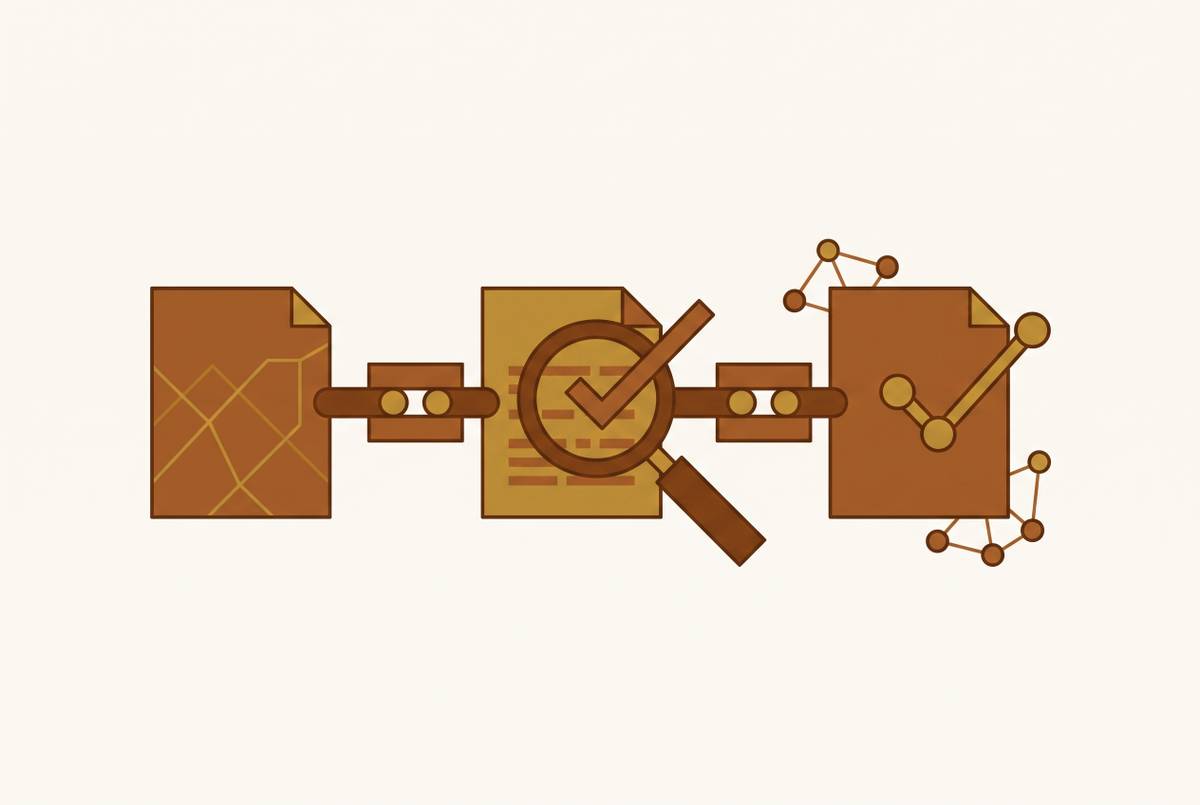
Scope varies by company type. Public companies generally face more extensive quantitative disclosure expectations than private companies, and private companies may elect to exclude certain quantitative information, but the qualitative disclosure obligations stay in place regardless of whether a company is public or private. None of this is produced from thin air. Every one of these disclosures draws from the same underlying data structure: a commission capitalization waterfall that tracks beginning balances, newly capitalized commissions added during the period, amortization recognized, any adjustments or reversals, and the resulting ending balance. That waterfall feeds the disclosure, and if it is not accurate, the numbers a company publishes cannot withstand scrutiny.
Why commission plan complexity makes disclosure accuracy harder
The complexity of a company's compensation plan determines directly how granular and reliable its underlying commission data has to be in order to produce disclosures that hold up. Tiered rates, accelerators that kick in once a rep crosses a quota threshold, and multi-level structures that pay both a rep and a manager on the same closed deal all introduce variability into the per-deal commission amount, and every one of those variations changes which amortization period applies and what the capitalized balance should read at any given moment.
Plan design itself has become an accounting input, not just a sales operations decision. Entities have to assess their own specific compensation plans to determine the right accounting treatment for incremental costs, so if a company changes commission rates or renewal structures mid-year, that counts as an accounting event. It can force a reassessment of amortization periods already applied to deals in progress, not just a go-forward adjustment for new business. Complexity here isn't itself a flaw in a compensation plan. Rich tiering and multi-level incentive structures are often what a sales organization needs to drive the right behavior, but when a plan gains a layer of sophistication, the data tracking it needs to gain precision to match.
That data demand is concrete. The waterfall schedule requires clean, per-deal commission data available in close to real time: the commission amount tied to each specific deal, the rate that applied to it, the amortization period assigned to it, the amortization recognized to date, and the remaining unamortized balance, all reconciling back to the underlying deal records. This is not a schedule that can be reconstructed after the fact from summary totals in a payroll report. When renewal commission rates differ from initial rates, the system recording these commissions has to distinguish initial-period commissions from renewal-period commissions at the individual deal level, not as an aggregate figure rolled up at the end of a quarter.
Where spreadsheet-based commission tracking breaks down
Errors introduced at the point where commissions are calculated do not stay contained to payroll. They flow directly into the ASC 606 capitalization waterfall, producing capitalized balances, amortization schedules, and financial statement disclosures that are wrong from the moment they're built, regardless of how carefully the accounting team downstream applies the standard to the numbers they're handed.
Formula drift is the most common point of failure in a shared commission spreadsheet. Any user with edit access can overwrite a formula cell without the file raising any warning, and one broken reference in a nested calculation can silently miscalculate payouts across an entire deal cohort. That kind of error becomes visible only when a rep disputes a payment, sometimes pay periods after the miscalculation first occurred, by which point it has already fed incorrect figures into whatever capitalization schedule Finance built on top of it.
Spreadsheets also tend to lack any audit trail. When a payout dispute arises, you typically find no log that shows what calculation rules ran, what underlying data they used, or who made manual adjustments along the way. Proving a calculation correct after the fact means reconstructing the logic from whatever snapshot survives, which takes hours and frequently resolves nothing conclusively. That absence of an audit trail isn't just a payroll inconvenience. Locked pay periods, logged approvals, and traceable deal-level calculations are precisely what ASC 340-40 disclosure reviews and external audits require, and a spreadsheet that can't show its work can't support a disclosure an auditor will sign off on.
The problem compounds when reps notice discrepancies in their own payouts, because then they start building personal spreadsheets to check Finance's math on their own. At that point the organization has multiple competing versions of commission truth circulating at once, none of them reconcilable with confidence back to the official ASC 606 waterfall. For commission-heavy sales teams, the top performers are usually the ones who track their own compensation most closely, so if one discrepancy goes unexplained, it can erode the working relationship between Sales and Finance, and it can cost the company reps it can least afford to lose.
What Finance and RevOps teams need for defensible disclosures
Producing accurate ASC 606 commission disclosures is less an accounting problem than an operational and data infrastructure one, and Finance and RevOps have to solve it jointly rather than treat it as separate departmental responsibilities. The standard's disclosure requirements assume a level of data granularity that most organizations' existing commission processes were never designed to produce.
The waterfall schedule requires per-deal commission records tied directly to CRM data: for each individual deal, the commission amount, the rate that applied, the amortization period assigned to it, the amortization recognized to date, and the remaining balance. None of that can be reconstructed reliably from summary exports pulled together at quarter-end. Once a commission pay period closes and amounts receive approval, those records need to become immutable, with any subsequent adjustment, whether a clawback or a correction, logged as a discrete, traceable event. That is what lets the resulting disclosure show a clean movement schedule an auditor can actually follow.
The underlying data also needs to keep the ASC 340-40 contract cost asset categorized separately from other contract assets at the deal level. A system that fails to make that separation will aggregate the two together in the financial statement presentation, which is precisely the kind of classification error auditors are trained to catch. Compensation plan versioning matters as well: when a company changes its rates, tiers, or renewal structures, the system needs to preserve the amortization logic that applied under the prior plan for deals already in progress under it, while applying the new plan's terms only to new deals going forward. Taken together, these requirements describe a discipline of data governance around commissions that sits upstream of the accounting function, and it decides whether you can defend the disclosures that function produces.
Sources
- BLUEPRINT: A BDO SERIES Revenue Recognition Under ASC 606 Updated October 2025
- 33.4 Revenue disclosures
- 13.2 Costs of Obtaining a Contract
- How to Account for Sales Commission Under ASC 606
- The ASC 606 (revenue recognition) transition: cost capitalization
- How the New ASC 606 and ASC 340 Guidance Impacts SaaS Companies
- C.12 Contract Costs (Chapter 13 of the Roadmap)
- Heads Up — ASC 606 Is Here — How Do Your Revenue Disclosures Stack Up? (July 11, 2018)