Channel Partner Commission Cost Versus Direct Sales Cost Comparison
Direct and channel models hide their true costs in different places.
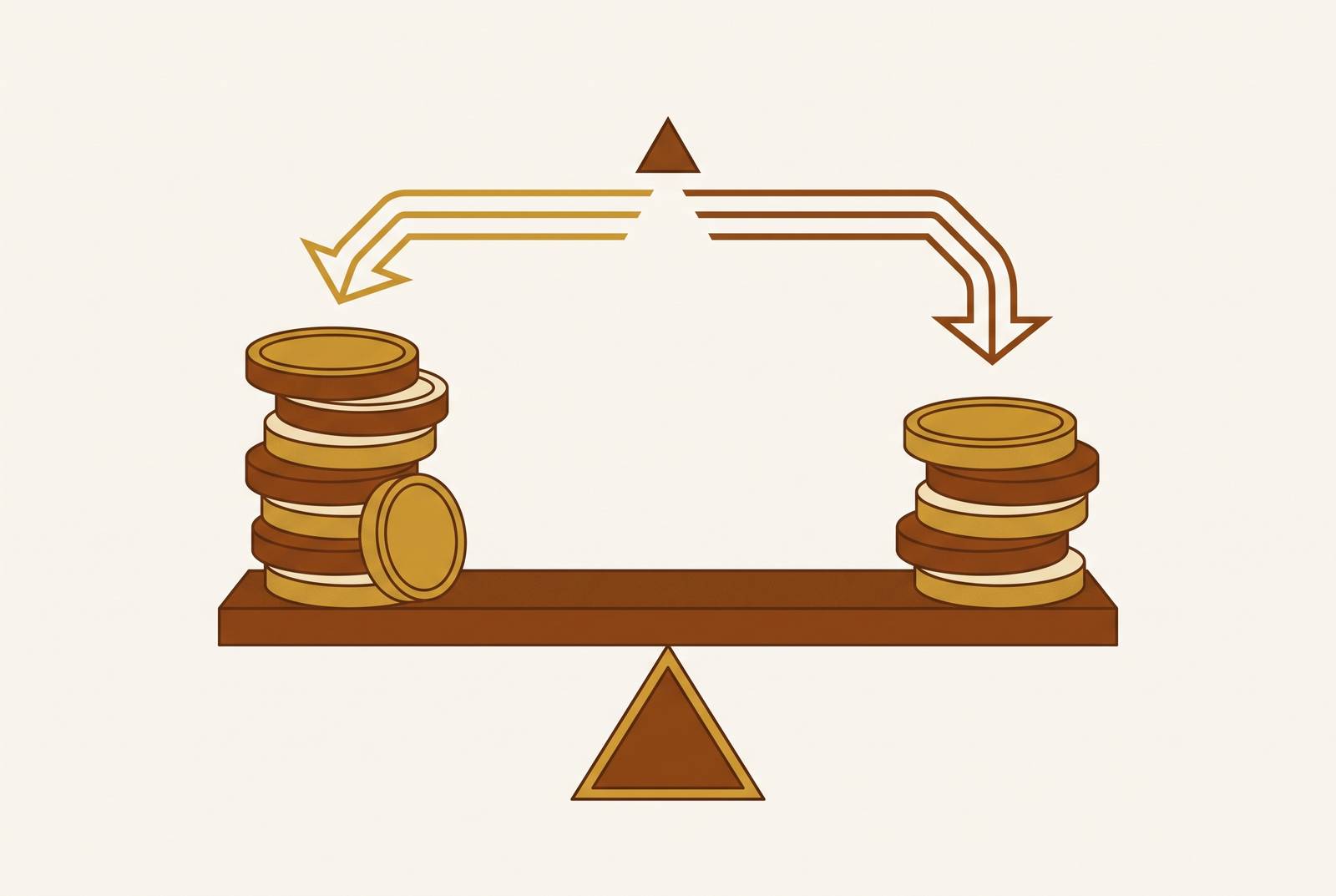
Most cost comparisons between channel and direct sales stop at the commission rate or the margin a company gives up to a partner. That single number hides a much deeper cost stack that sits inside each model, and treating it as the whole picture leads to decisions built on incomplete math. Direct sales carries a visible, line-itemed cost: salaries, benefits, tools, and management overhead, all booked before a single deal closes. Channel sales moves much of that cost off the books and onto the partner, but it doesn't eliminate cost. It replaces payroll with recruitment, enablement, co-marketing, and a partner management team, and those costs rarely sit next to the commission rate when someone runs the comparison. The structural difference between the two models, owned headcount against a distributed selling motion, is what makes a true side-by-side so hard to pull off, and that same difference creates two distinct commission management problems. Direct commissions flow to employees on a predictable payroll cycle, and internal controls are built around it. A partner reports the deal data that channel commissions are based on, and the vendor often cannot verify it independently.
What each model costs: the full stack
The real cost of either model appears only when every line item gets counted, not just the headline figure. On the direct side, the stack includes base salary, variable commission, benefits, and quota-carrying headcount, all fixed costs that exist whether or not revenue arrives on schedule. A company running direct sales controls the full cycle, hiring, training, marketing, onboarding, and support, and each of those is its own budget line with its own manager and its own forecast. That control comes at the cost of scalability: adding a new territory means adding people, and headcount growth sets the ceiling on how fast the model can expand.
Channel sales swaps salary for commission, margin give-up, or referral fees, and none of those disappear once they're paid. Channel partner commissions run across tiers, from lower rates for entry-level partners up to higher rates for top performers, and they're often layered with recurring revenue shares on renewals and performance kickers on top of that. Partner enablement, marketing development funds, and co-sell support are additional costs the vendor absorbs just to keep partners productive and selling the right message. Training partners and keeping their collateral current takes ongoing investment, not a one-time setup cost, which is part of why the model looks cheaper on paper than it runs in practice. The scalability argument for channel comes from the ratio on the vendor side: one channel manager can oversee a large roster of active partners at once, a leverage direct sales headcount can't match.
The costs easiest to miss sit in two places. Channel sales trades margin for reach: partners take a cut that compresses gross margin in ways a simple customer acquisition cost comparison never captures. Channel sales also creates a forecasting dependency, because revenue projections lean on partner-reported pipeline data that the vendor doesn't control and often can't audit in real time. Neither model is categorically cheaper once every cost gets counted. A company must decide which costs it is prepared to carry directly and which it is prepared to hand off, along with the forecasting and control it gives up in the process.
How channel commission structures are built
Channel partner compensation is a layered structure with several variables that interact with each other, and that complexity is intentional. A channel commission structure typically mixes tiered rates tied to partner level and deal volume, recurring revenue shares on renewals, referral fees for partners who never take title to the product, and performance kickers, with more than one of those potentially applying to a single deal at once.
Tier progression adds its own layer of difficulty. A partner's rate can shift mid-year once they cross a volume threshold, and when that happens, you either adjust deals already closed retroactively or apply the change going forward, and getting that wrong creates disputes that are hard to unwind later. SPIFs stacked on top of base commission introduce a time-bounded variable that has to be tracked on its own schedule and paid on a different cycle than the base rate. A strong channel program needs compensation that's transparent to the partner, but that doesn't mean it's simple to calculate. Those are two separate problems, and solving the first one doesn't solve the second.
This complexity follows competitive logic. The structure has to make selling the vendor's product more financially attractive than selling a competitor's, and partners allocate their selling effort based on margin per deal, not loyalty. So the full compensation package has to beat what a rival vendor offers for the same shelf space on the partner's price list, once you add base margin, rebates, and SPIFs together. Referral partners never take title to the product and are paid a defined referral fee on first-year revenue. Agent partners earn commission rather than margin too, but often collect it over the life of the customer relationship rather than just at close; that creates a separate payout track running in parallel with the referral structure. Managing that complexity reliably means moving beyond spreadsheets. Sales commission software such as Quota Queue handles tiered rates, accelerators, and layered compensation rules in a single auditable workflow, cutting down the manual error that builds up across disconnected tier tracking and SPIF administration.
Direct sales commission plans carry their own structural risk
Direct sales commissions look simpler than channel commissions at first glance, but accelerators, clawbacks, role splits, and SPIFs give them real structural complexity once a plan is fully built out. A typical B2B SaaS direct plan is rarely a flat rate paid on every closed deal. It usually includes a base rate at quota attainment with tiered accelerators that kick in above quota, and the metric driving commission often changes by role: closed revenue for account executives, qualified pipeline for business development reps.
Accelerators that trigger at specific attainment thresholds only work if the company knows exactly where each rep sits in the period at any given moment, and that requires timely, accurate deal data flowing out of the CRM without lag or manual re-entry. Clawbacks add a retroactive dimension on top of that: when a deal cancels or a customer fails to pay, the commission already paid on it has to be recovered, and tracking that recovery across pay periods takes its own system of record. SPIFs run on their own cycle too, and you have to administer them alongside base commission without double-counting a rep's payout.
The napkin test offers a useful design check for any direct plan: if a rep can't roughly work out their own commission on the back of a napkin, the plan is too complex to motivate the behavior it's meant to drive. Passing the napkin test, though, doesn't guarantee a plan will execute cleanly. A design simple enough for a rep to estimate in their head can still fail at the calculation stage if the underlying machinery, spreadsheets, manual CRM pulls, disconnected payroll exports, is error-prone. Direct and channel plans fail for different structural reasons, but both demand the same thing: accurate, auditable calculation regardless of which model is running.
Why spreadsheets fail differently for channel commissions
Spreadsheets are error-prone for commission calculation under either model, but channel commissions add a data sourcing problem that makes it worse. On the direct side, the data source is at least internal: deal data lives in the CRM, commission rates live in a spreadsheet, and reconciling the two is a matter of a person connecting systems the company already owns, CRM, spreadsheet, and payroll.
On the channel side, deal data often arrives from outside the company entirely, through partner portals, deal registration systems, or manual submission from a partner's own sales team. That adds a validation step before calculation can even start, and when a vendor can't independently verify a partner-reported deal, every calculation built on top of it rests on an input nobody confirmed. A spreadsheet has no way to flag that kind of risk; it just computes whatever number gets typed into the cell. Tier changes mid-period, retroactive rate adjustments, and multi-component payouts combining margin, rebate, and SPIF multiply the number of cells and lookups a spreadsheet has to carry, and each one is a fresh place for an error to hide.
The consequence differs by model too. When a direct rep questions a payout and there's no audit trail to resolve the dispute, the rep starts keeping a shadow spreadsheet of their own, tracking what they believe they're owed separately from what Finance says they're owed. When a channel partner questions a payout under the same conditions, the stakes are higher: an unresolved dispute erodes the financial trust that drives a partner's selling effort, and a partner who stops trusting the payout doesn't just complain, they start steering deals toward a competing vendor's product instead. Channel sales introduces a forecasting dependency and margin complexity that direct sales doesn't carry, and calculating the true cost of either model means tracking every commission payout, tier progression, and revenue-share detail across both, a data-intensive task that exposes exactly where spreadsheet-based tracking runs out of road and points toward commission calculation tools built to handle the full payout workflow.
The data and auditability requirements that differ between channel and direct commission management
You need auditability under both models, but the inputs feeding it, and the compliance obligations riding alongside it, differ between the two. For direct commissions, the audit trail runs in a straight line: CRM deal data flows through calculation to a payroll-ready output, the whole chain stays internal, and each step can be locked and timestamped as it happens.
Channel commissions demand a longer and more exposed chain. The audit trail has to cover how partner-reported deal data was validated in the first place, which partner tier applied at the time and when that tier last changed, and how a multi-component payout combining margin, rebate, and SPIF was assembled into a final number. That's a more complicated record to keep, and it starts with data the vendor doesn't generate itself.
Pay transparency laws in states including California, New York, and Illinois now require employers to disclose pay ranges in job postings and flag when a position is commission-based. For direct reps, that regulatory pressure translates into payout statements that can actually explain themselves. For channel programs, it extends further, into documented tier qualification criteria and SPIF eligibility rules that function as their own compliance surface. Separately, ASC 606, and IFRS 15 with its stricter criteria, require that incremental commission costs get capitalized as assets and amortized over the contract term. For both channel and direct commissions, that accounting standard means the commission system has to tie each payout back to the recognized revenue behind it, not just to the date the deal closed. Locked pay periods and logged approvals matter under either model for the same reason: they stop retroactive edits from creating a gap between what Finance approved and what actually got paid.
What a purpose-built commission platform must handle
A platform built to handle both models has to do more than calculate a number correctly. It has to connect to wherever the deal data actually lives, support multi-component payout logic without custom workarounds, and produce statements that both reps and partners can read and trust.
For direct commission management, the essentials are CRM integration that pulls deal data without a manual export, support for tiered rates and accelerators that doesn't require custom code for every plan variation, clawback tracking that spans multiple pay periods, rep-facing visibility into earnings by deal, locked pay periods with a logged approval chain, and a payroll-ready export at the end of the process.
Channel commission management asks for all of that plus more: tier-based rate differentiation, assembly of multi-component payouts where base margin, rebates, and SPIFs are calculated separately and then combined, tracking of tier qualification across periods, and a full audit trail running from the partner-reported deal through validated calculation to an approved payout. Quota Queue is built around this workflow, and it prices by active compensation plan rather than by seat, so a channel program adding partners doesn't pay a per-user cost penalty as the partner base grows. Quota Queue also states that it does not train on customer data, which matters for channel programs because partner commission figures are commercially sensitive, so you should confirm this against any platform's stated data handling policy.
Beyond any single vendor, the evaluation criteria that matter when comparing options include automation depth for complex payout logic without manual workarounds, native integrations with CRM and ERP systems that remove manual import steps, earnings portals visible to both reps and partners, structured workflows for resolving disputes, timestamped audit trails, and a clear security posture around sensitive compensation data. Some buyers will weigh a general-purpose spreadsheet template against a dedicated platform, or consider building calculation logic in-house against an outsourced managed service; each approach trades some combination of cost, control, and auditability, and the right choice depends on how many plans, tiers, and partners the company is actually running.
When channel math holds and when direct cost advantages reassert
The channel cost advantage holds under specific conditions, but it breaks down if you don't actively manage those conditions. Channel math depends first on margin sufficiency: if a partner's margin doesn't cover what it costs them to sell, technical pre-sales effort, proposal work, time spent in the sales cycle, the channel structure won't generate sustained selling activity no matter how many SPIFs get layered on top.
Partners allocate selling effort based on financial return per deal, and if a competing vendor's program pays more in total, combining margin, rebates, and SPIFs, partners will prioritize that vendor's product over the one with the weaker package. The channel cost advantage disappears the moment a partner program stops competing on that basis. Direct sales, meanwhile, tends to retain customers longer, and that retention difference affects long-run economics in ways a customer acquisition cost comparison focused purely on channel doesn't capture. If a company moves entirely to channel without modeling the retention gap, it may find its projected savings are smaller than expected once renewal rates play out.
Most B2B companies end up running both models at once, direct for accounts where relationship depth and margin justify the overhead, channel for the scale and market reach direct headcount can't reach on its own. That means managing two distinct commission structures simultaneously, each with its own data sources, calculation logic, and audit requirements. The structural difference between owned headcount and a distributed selling motion creates two different commission management challenges: direct commissions flow to employees on a payroll cycle with built-in controls, while channel commissions flow to external entities on deal-reported data that's often unverified and scattered across separate systems. Whichever mix a company runs, accurate, auditable commissions on both sides are what keep reps and partners confident their payouts are correct and willing to keep selling at full effort.